
FOR IMMEDIATE RELEASE
11 October 2026
SANGO OTA, OGUN STATE, NIGERIA
As the world commemorates the International Day of the Girl Child, African Girls Empowerment Network (AGE Network) has renewed its call for decisive action against child marriage and sexual exploitation, urging government institutions, schools, families and development partners to invest in the protection, education and future of every girl.
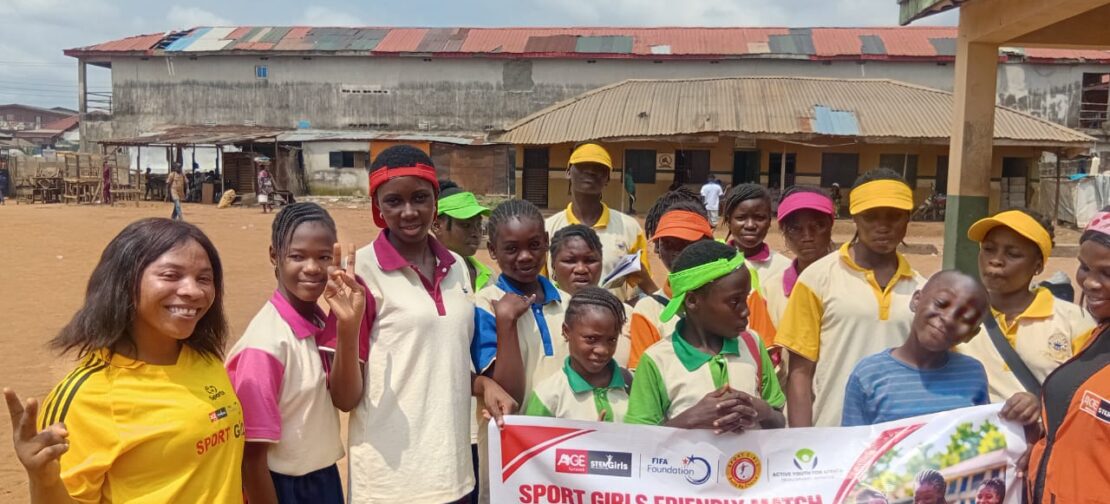
The call followed a football and girls’ rights programme AGE Network organised through its Sport Girls Initiative on Saturday, 10 October 2026, at School 3 Field, Joju, Sango Ota, Ogun State.
The event brought together 35 schoolgirls from three schools for a friendly football match and interactive rights education, giving girls a chance to discuss issues affecting their safety, education, dignity, and aspirations.
Held under the campaign message “Kick Out Sexual Exploitation and Child Marriage in Schools and Communities,” the programme reinforced the global theme of the 2026 International Day of the Girl Child, “End Child Marriage and Invest in Girls’ Rights!”
For AGE Network, the two messages are closely connected. Ending child marriage requires more than preventing girls from entering early unions; it also demands protection from sexual exploitation, access to education and the freedom to make decisions about their own futures.
Addressing participants and representatives of the schools, Ms. Matina Ebri, Gender Advocate, Team Lead and Coordinator of the Sport Girls Initiative, said the international theme could not have come at a more critical time for Nigeria.
She raised concern about the country’s child-marriage burden, drawing attention to UNICEF’s findings that Nigeria accounts for the largest absolute number of child brides in Africa, with more than 23 million girls and women married before the age of 18.
Ms. Ebri noted that the challenge is not confined to any single region of the country. In Ogun State, available 2024 data show that 22.5 per cent of women aged 20–24 were married or entered a union before turning 18.
She maintained that the continued occurrence of child marriage in southern Nigeria underscores the need for sustained advocacy and stronger protection systems at the community level.
“We cannot continue to celebrate girls on the International Day of the Girl Child while ignoring the conditions that deny them their childhood. This year’s theme calls on us to end child marriage and invest in girls’ rights. Our message at AGE Network is that this investment must begin in our homes, schools and communities, where girls should be protected from sexual exploitation, abuse and every practice that threatens their education and future.”
Ms. Ebri further emphasised that protecting girls must involve listening to their experiences and ensuring they have the knowledge, confidence and support to recognise and report abuse.
That message became particularly significant during the interactive safeguarding sessions, when participants shared their understanding of personal safety and experiences of potentially threatening situations.
One schoolgirl recounted being followed by a man while running an errand for her mother. She explained that she immediately returned home and informed her mother about the encounter.
Her account highlighted the value of open communication between children and caregivers, as well as the importance of creating supportive environments where girls can speak up without fear of being dismissed or blamed.
In another exchange, participants examined misconceptions surrounding financial assistance, gifts and sexual expectations.
Through the myth-and-fact activity, the girls were reminded that accepting gifts, money or favours never creates an obligation to engage in sexual activity.
The discussions also addressed sexual exploitation in schools, particularly situations where students are pressured to exchange sexual favours for academic marks or opportunities.
One participant rejected the idea that sexual favours should determine academic achievement, affirming the importance of studying and preparing for success.
AGE Network used the discussion to reinforce the principle that every student has a right to fair assessment and a learning environment free from sexual harassment, coercion and exploitation.
Ms. Esther Asuquo, the girls’ chaperone, facilitated the safeguarding and protection session, guiding participants through discussions about personal boundaries, recognising unsafe situations, seeking assistance and identifying trusted adults.
Alongside safeguarding education, Ms. Ebri engaged the girls on rights, informed decision-making, career opportunities including Sport and the importance of developing their talents.
The girls were encouraged to view football and other sporting activities not only as recreation but also as opportunities to build confidence, acquire life skills and pursue future ambitions.
Teachers accompanying the participants contributed guidance on body care, education and responsible decision-making, while a closing reflection led by Ms. Asuquo reinforced the importance of dignity, individuality and mutual respect.
AGE Network maintained that a girl’s worth must never be measured by her experience of harassment or abuse, stressing that the responsibility for such acts lies with perpetrators.
The participating schools were My Crown Model College, represented by 15 girls and two female teachers; In His Light Group of School, represented by eight girls; and Living Spring School, represented by 12 girls and one female teacher.
A sports master from Assurance School also volunteered his services, supporting the football activities and facilitating the girls’ rights card games.
Beyond the day’s activities, AGE Network is calling for renewed commitment to child protection across schools and communities, particularly through stronger safeguarding policies, accessible reporting mechanisms and appropriate responses to sexual abuse and exploitation.
The organisation also urged government and development partners to increase investment in initiatives that enable girls to remain in school, participate in sports, build leadership skills and pursue meaningful career opportunities.
“A girl who is protected, educated and allowed to develop her talents has a better chance of determining her own future. That is why our campaign goes beyond football. We are using sport to bring girls together, listen to their experiences and strengthen their understanding of their rights. Our responsibility as adults is to ensure that the protection and opportunities we discuss become a reality in their everyday lives.”
Through its Sport Girls Initiative, AGE Network continues to promote sport as a platform for girls’ rights education, personal development and community engagement, while challenging harmful practices that restrict girls’ participation and opportunities.
As the world marks the International Day of the Girl Child 2026, the organisation calls on all stakeholders to turn the global commitment to ending child marriage into meaningful action at the local level.
AGE Network believes that every girl deserves to grow up in an environment where her safety is protected, her education is valued, her voice is heard, and her ambitions are supported.
The organisation therefore reiterates its campaign message: “Kick Out Sexual Exploitation and Child Marriage in Schools and Communities.”
African Girls Empowerment Network (AGE Network) is a youth-led non-governmental organisation working to advance gender equality and the rights, health, education, safety and opportunities of girls and young women.
Through advocacy, community engagement, education, sports and leadership development, AGE Network promotes the protection and empowerment of girls, particularly those from vulnerable and underserved communities.
African Girls Empowerment Network (AGE Network)
Email: operations@agenetwork.org
Website: https://agenetwork.org
Social Media: @TheAGENetwork
Chat4Health Hotline: 0806 942 3539
AGECARES Speak Up and Heal Support Line: 0704 806 5450